

The Spike Bar
Golf culture. Objects of note. News from the links and beyond.
From the Floor
Objects of note · View the shop →PING carry bags from the L8 and Hoofer years, Pebble Beach credentials, club caps and press prints with the paper trail still attached. Every object on the floor is photographed front and back, and described as found.
Founding members see new prints before they are listed.
Culture
Fashion · Travel · Motoring
An E55 in everything but the paperwork
A Japanese-market E430 Avantgarde wagon, re-engined with the 5.4-litre AMG V8 and finished as an E55 before it ever left Japan. Black over black and grey leather, 38,000 miles, no reserve. The long roof, done properly, and the clubs still lie flat.
Kyoto, new approaches on old foundations
A twelfth-generation weaving house has started making menswear — heritage nobody had to invent.
Read at Monocle →Los Angeles, table by table
Twenty new openings, from Koreatown hideaways to bougainvillea-covered terraces.
Read at Wallpaper* →The trench, put on the record
Personal property, not a size tag. Provenance in the lining.
Visit the V&A →Golf
The bag · The numbers · The shoes“I won’t change until the grooves start to go.”
- Driver
- Titleist 983K, 9.5°. Fujikura Speeder 757 graphite, 44½″, X-flex, D-8.
- 3-Wood
- Titleist 980F, 15°. Royal Precision Rifle Lite 7.3 steel, 42½″, D-8.
- 2-Iron
- Driving iron by Fourteen, the Japanese maker. 18° — three degrees more loft than his 3-wood, played off the tee when the hole asked for it.
- Irons
- Titleist 690MB, 3–PW. Rifle Flighted 7.2 steel, D-6.
- Wedges
- Cleveland 588, 55° and 59°.
- Putter
- Scotty Cameron Newport 2 Studio Stainless, 35″, standard lie and loft.
- Ball
- Titleist Pro V1x. Changed after every birdie.
| Driver | 280 | 9.5° |
| 3-Wood | 255 | 15° |
| 2-Iron | 235 | 18° |
| 3-Iron | 222 | 21° |
| 4-Iron | 212 | 24° |
| 5-Iron | 200 | 27° |
| 6-Iron | 190 | 31° |
| 7-Iron | 180 | 35° |
| 8-Iron | 168 | 39° |
| 9-Iron | 154 | 43° |
| PW | 141 | 48° |
| SW | 127 | 55° |
| LW | 110 | 59° |
As recorded in Golf Digest, April 2003.
Updated 27 Sep · Data Golf
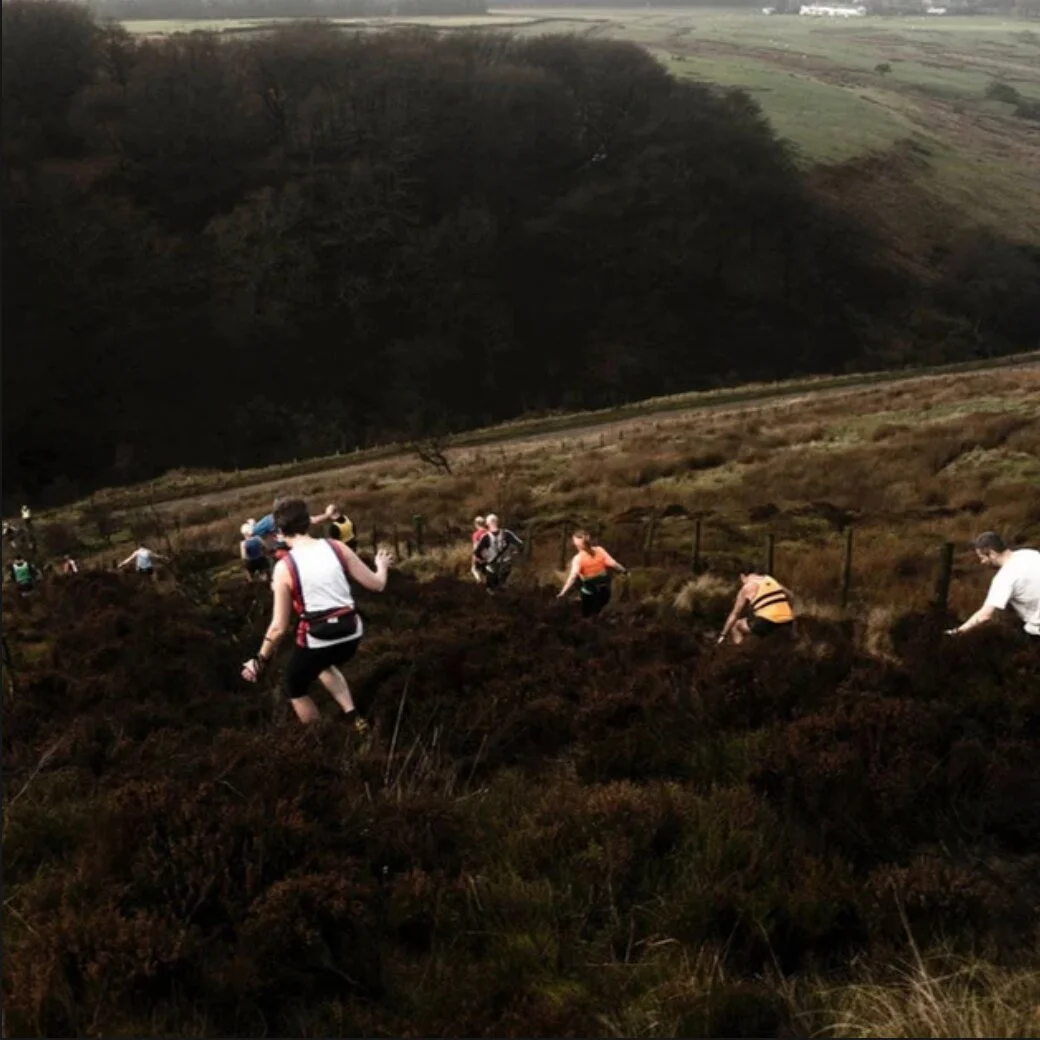
Built for the fells
Specialist athletic shoes from Bolton since 1961. A small delivery is heading west.
Norman Walsh entered J.W. Foster & Sons as a fourteen-year-old apprentice in 1945. By 1948 he had been selected to make the Fosters De Luxe track spikes worn by British athletes at the London Games.
He established his own company in 1961. From Bolton, on the edge of the Pennines, Walsh developed footwear for rugby, road racing and the steep, rough country of fell running — lightweight shoes shaped by use rather than fashion. Six decades on, that quiet British line continues, and it comes to The Professional Shop this autumn.
The bag that learned to stand
From the 1988 L8 to the Hoofer generations of the 1990s and 2000s: how PING made the automatic stand bag light, dependable and ordinary — in the best sense.
PING did not invent the idea of putting a stand on a golf bag. Its achievement was to turn the stand into a convincing carry system: a soft, light bag whose legs opened when the golfer set it down and folded away when the bag was lifted. The L8 established that grammar in 1988. The Hoofer made it easier to live with.
Filed 5 July 1988 · Patent US 4,834,235 · Solheim + Schmidt
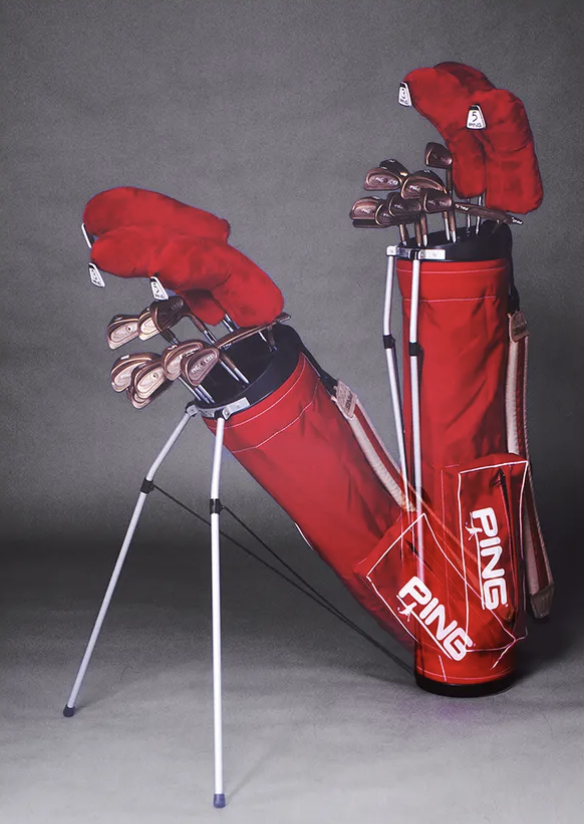
The first L8. The stand was filed on 5 July 1988 and granted on 30 May 1989 to John A. Solheim and Gregory J. Schmidt: a fabric bag stiffened by a strut, a pair of legs and a U-shaped actuator. Put it down and the legs spread; pick it up and they fold. Fewer parts, less weight, one automatic motion.
Proven by Oklahoma State. The team carried early bags, other college programmes noticed, and adoption spread through the most demanding showroom there is: players walking tournament golf.
The L8’s soft lower body could fold inward when the legs deployed, catching grips on the way back in. Solheim changed the top and bottom from round to oval. The base looked like a hoof, and the Hoofer had its name.
From one clever bag to a platform: dividers, a cam-actuated stand, an integral handle, and compound-bend legs for a wider track that still nests against the bag. Improve stability without making the golfer carry the improvement.
Reading an early L8: the mechanism is the identity · Reading an early Hoofer: the base tells the story
Curiosity
Field Note No. 001 · Original press photography
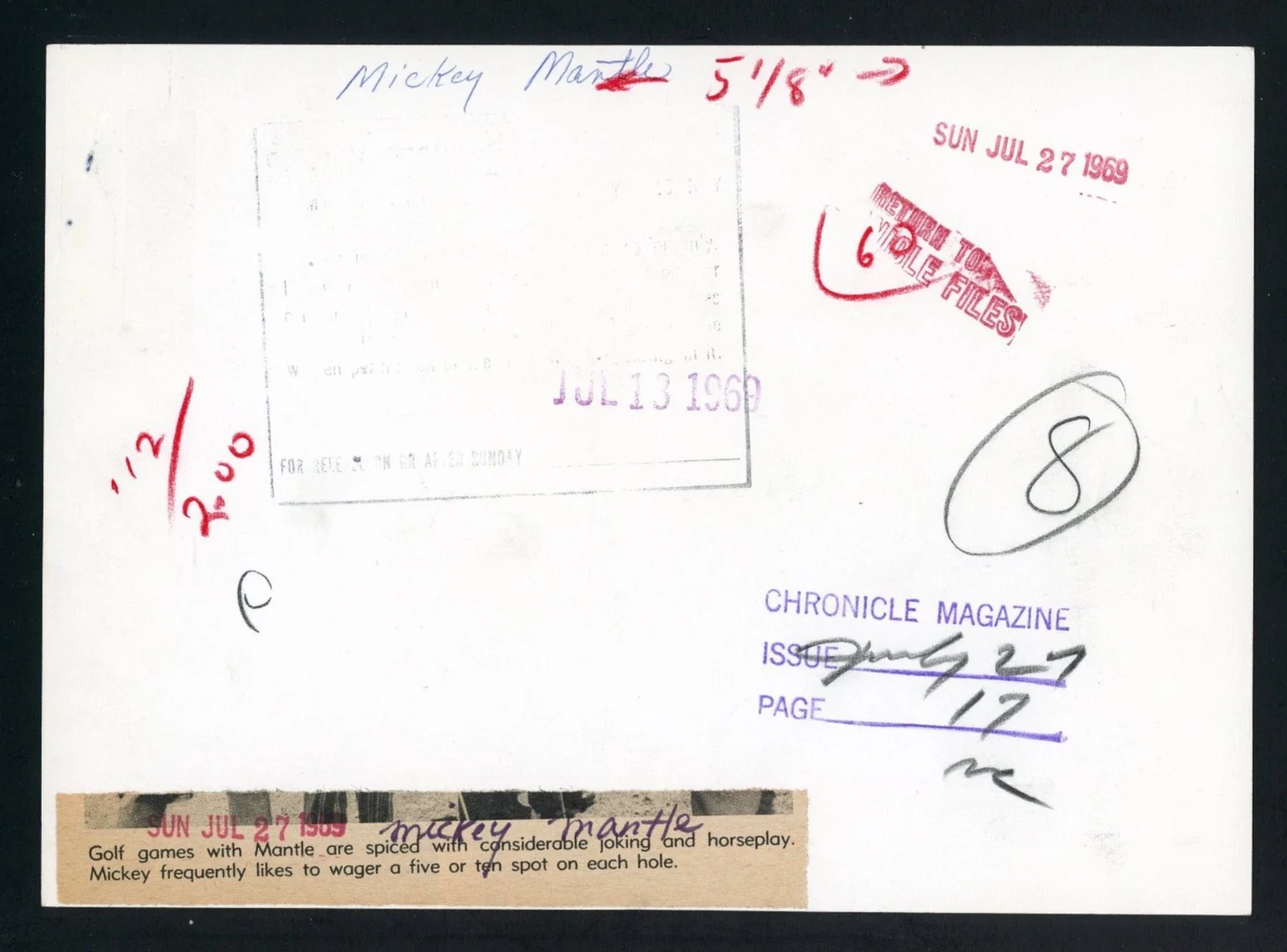
The photograph is only half the story
The image draws the eye. The stamps, captions and crop marks on the reverse explain where it went, when it ran and why it survived.
Before photographs became files, they moved from hand to hand. A photographer exposed film. A darkroom made a print. An agency or newspaper captioned it, stamped it, cropped it and filed it. The same print might be pulled months or years later, marked again, then returned to a drawer.
This Mickey Mantle photograph carries that working life on its back: a JUL 13 1969 stamp, a SUN JUL 27 1969 run date and a notation for the Chronicle magazine section. The front records the scene. The reverse records the life of the photograph. The wear is evidence that the object did the job for which it was made.
Original negative, period print
First generation, printed within roughly two years of the image date.
Original negative, later print
From the original negative, outside the two-year period.
Duplicate source, period print
Made in period from a duplicate negative or wire transmission.
Duplicate source, later print
A later-generation print from a duplicate or copy source.
The negative is the source
The newspaper page is the reproduction; the press print is the working object that helped create it.
Read the verso
Agency credits, date stamps, caption slips, grease pencil, crop lines and run dates: provenance to test, not decoration to erase.
Type is not the whole verdict
A type addresses generation and timing. It does not settle attribution, subject, rarity, condition or value on its own.

The Lively Morgue
The New York Times built one of the clearest public demonstrations of how to read a press photograph as an artifact: images paired with their marked reverses, so the publication history, sizing and the caption that reached print sit beside the picture. Front and back belong together.
Join the Spike Bar
Sent when there is something. No noise.
Free
Twice a week: the three desks, From the Floor, and the pieces worth your time elsewhere.
The founding list
First look at each print before it is listed, the Tailgate and brand nights at the Gallery, the full archive, and an annual gift.
In a British clubhouse, the spike bar is the informal room — the one where spikes are allowed and the shoes stay on, as against the formal lounge and its dress code. This is ours.


